Nestled in the Karakoram mountains, Hunza Valley has long captured the imagination of travelers—but can foreigners actually visit…
Hunza Tour Packages 2025

Our Hunza tours put you at the heart of it all: walk to ancient Altit and Baltit forts, cruise across Attabad Lake, and share meals with locals who make you feel at home.
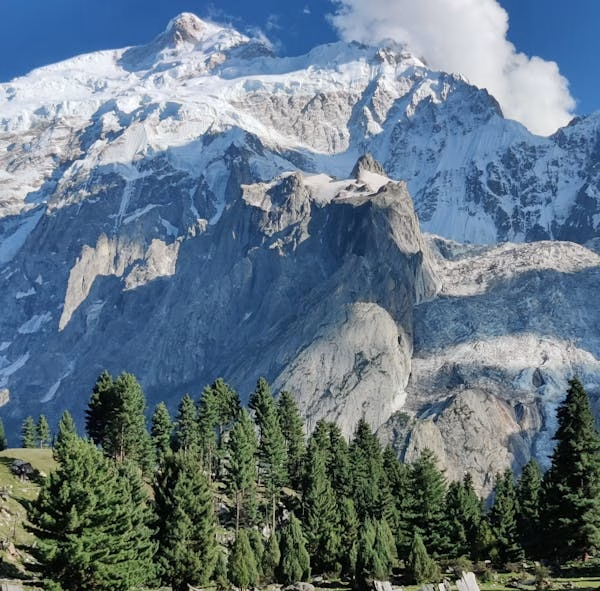
With small groups and expert local guides, witness Rakaposhi glowing at sunset like in the picture above, stay at the panoramic Eagle’s Nest, and drive to Khunjerav National Park (you might see Markhor, Ibex, and maybe even a Snow Leopard!).
We can also arrange a personalized vacation to Hunza. We’ll put together a trip just how you want it. Drop us an email at info@gopleiades.com or give us your details in this form.
Are you more interested in hiking? Read more about our K2 Base Camp Trek.
Our Group Departures to Hunza Valley
Hunza Tour in March (Spring Hunza Trip) – Contact Us
Hunza Tour in July (Summer Hunza Trip) – Contact Us
Hunza Tour in September (Autumn Hunza Trip) – Contact Us
Hunza Tour in December (Winter Hunza Trip) – Contact Us
FACTS ABOUT HUNZA
Population
100,000
Capital City
Karimabad
Language
Burushaski
Currency
Pakistan Rupee
Time Zone
GMT+5
Drives On
Left Side
All You Need to Know about about Hunza Valley
Most descriptions of a Hunza tour mention turquoise lakes, snow-covered peaks, and villages that look like they belong on a postcard. And it’s true: the valley is almost impossibly photogenic.
But Hunza is more than a backdrop of mountain views.
A real trip here is about entering a place where history, hospitality, and untamed nature overlap in ways that words can only begin to capture.
What Makes Hunza Different
Hunza sits high in Gilgit-Baltistan, tucked into the Karakoram mountains at a point where three massive ranges meet: the Karakoram, the Himalaya, and the Hindu Kush. That geography alone makes it feel otherworldly. One minute you’re looking up at Rakaposhi, a 7,788-meter pyramid of snow, and the next you’re cruising across Attabad Lake, which is younger than Instagram (it was created in 2010 after a landslide).
And then there are the people. Hunza has a reputation for hospitality that even seasoned travelers find disarming. It’s not unusual to stop for directions in Karimabad and end up sitting in someone’s home drinking salted butter tea while they tell you about their orchard. A lot of tours will highlight forts and glaciers, but it’s these unscripted moments that stay with you.
Layers of History in the Valley
Hunza isn’t just dramatic landscapes; it’s also a living history lesson. For centuries, this valley was part of the Silk Road. Traders carried everything from silk to spices through these high passes, linking China with Central and South Asia. You can still trace parts of those caravan routes if you hike beyond the main towns.
Baltit Fort, which overlooks Karimabad, is the most obvious reminder of this past: a 700-year-old fortress restored with the help of the Aga Khan Trust for Culture. Inside, the wooden beams and stone walls tell stories of defense and royal intrigue. Just down the road is Altit Fort, even older, where villagers sometimes gather for festivals or cultural events. These aren’t ruins sealed off behind ropes; they’re places you can actually climb into and imagine what life was like centuries ago.
Adventure, Big and Small
Most people come to Hunza for the scenery, but how you experience it depends on what kind of traveler you are. If you want big adventure, there are treks to Ultar Glacier or the sprawling Batura Glacier, where ibex roam and you might not see another tourist all day. If you prefer something gentler, you can walk to Ultar Meadow for panoramic views or drive up to Eagle’s Nest to watch the sun set over a wall of 7,000-meter peaks.
Some sights are non-negotiable: the jagged Passu Cones are impossible to miss, and Attabad Lake, with its shockingly blue surface, is almost surreal. Hopper Glacier, just across the valley, gives you a raw, up-close sense of how alive the mountains really are. Each of these stops is spectacular, but the real trick is pacing. Hunza is the kind of place that punishes people who rush.
Everyday Life and Culture
Travel guides often describe Hunza as “timeless,” but that’s not quite right. It’s a valley that has modernized in its own way while holding onto traditions that still shape daily life. People speak Burushaski, Wakhi, and Shina, depending on the valley, but nearly everyone will switch to Urdu or English if they see you struggling.
Culturally, you’ll notice something unusual for a rural mountain valley: women here are often visible in public life. They run cooperatives, teach in schools, and manage small businesses. Festivals mark the agricultural cycle, with polo matches, drumming, and dance. And then there’s the food: chapshuro (a kind of meat pie), apricot dishes, walnut cake, and Hunza bread baked inside stone ovens. Eating here feels less like a restaurant experience and more like joining a family table.
Is Hunza Safe?
This is the question almost every traveler asks. The short answer is yes. Hunza is widely considered one of the safest parts of Pakistan. Crime rates are extremely low, and visitors often remark on how secure they feel walking through villages, even late in the evening. That said, Hunza is still a remote mountain valley. Landslides happen, power cuts are common, and internet outside of Karimabad can be shaky. It’s safe, but it’s not polished in the way a European alpine village might be.
Practical Tips You’ll Be Glad to Know
When to go: Spring (April–May) is famous for apricot blossoms; autumn (September–October) for golden trees against snowy peaks. Summer is peak season, with warm weather and clear skies.
How to get there: The flight from Islamabad to Gilgit is a jaw-dropper if the weather cooperates, but it’s often canceled. The Karakoram Highway is a safer bet: 14–16 hours of one of the most scenic drives in the world.
What to pack: Layers. Even in summer, mornings and evenings are cool. Bring sturdy shoes, a light jacket, and a good camera. And if you’re a tea person, be prepared: Hunza’s butter tea is an acquired taste.
Why a Guided Hunza Tour Helps
It’s technically possible to explore Hunza on your own, but having a guide changes the experience. Locals open up more, logistics get easier, and you’re far less likely to waste time on detours that go nowhere. Small group tours (the kind that cap at around a dozen people) give you both structure and flexibility: the big-ticket sights plus the chance to follow curiosity down side roads.
Final Words to Consider Booking our Hunza Tour
Hunza isn’t a place you “do.” It’s a place you fall into: conversations over tea, hours staring at a single mountain, evenings where the call to prayer echoes through the valley and you feel suspended in time. A Hunza tour is less about crossing destinations off a list and more about letting one destination get under your skin. If you’re looking for a trip that will linger long after you’ve flown home, Hunza is it.
READ MORE ABOUT HUNZA
Why Is Hunza So Famous? Ask any Pakistani traveler where they’d go to escape the noise of life,…
What Is Better: Hunza or Skardu? The Honest Comparison You’ve Been Waiting For There’s a question I’m asked…
When Did Hunza Become a Part of Pakistan? Uncovering the Forgotten History of the Hidden Kingdom I first…
The Longevity Secrets of the Hunza Valley It was a quiet afternoon in the village of Altit when…
Where is Hunza Located? A Hidden Himalayan Paradise Unveiled I still remember the first time I laid eyes…
Renting a Car to Hunza – Your Complete 2025 Travel Guide There’s something about seeing the mountains rise…
Renting a Car in Gilgit – Your Ultimate 2025 Guide to Exploring Hunza and Beyond The first time…
How to Reach Hunza from Lahore in 2025 The first time I heard about Hunza, I was sitting…
How to Reach Hunza from Islamabad: Complete Travel Guide 2025 What if I told you that one of…
Best Hotels for Stay in Hunza: 2025’s Top Luxury & Budget Picks Have you ever dreamt of waking…
15 Real Things to Do in Hunza (2025 Guide for Curious Travelers) What if I told you that…
Frequently Asked Questions About Hunza Tours
1. Where exactly is Hunza Valley?
Hunza Valley is located in Gilgit-Baltistan, northern Pakistan, along the legendary Karakoram Highway. It sits at the crossroads of three major mountain ranges: the Karakoram, Himalaya, and Hindu Kush. The region is about 600 km from Islamabad and is accessible by both road and air.
2. What is the best time of year to visit Hunza?
The best months for Hunza tours are from April to October. Spring (April–May) brings apricot blossoms across the valley, summer (June–August) offers warm days and clear skies, and autumn (September–October) is famous for golden trees against snow peaks. Winter is beautiful but can be harsh, with limited accessibility.
3. How do I get to Hunza?
Most travelers fly from Islamabad to Gilgit (a short 1-hour flight with jaw-dropping mountain views), then continue by road to Hunza. You can also drive the entire way from Islamabad along the Karakoram Highway, which takes about 14–16 hours but is considered one of the most scenic road journeys in the world.
4. Is Hunza safe for travelers?
Yes. Hunza Valley is widely regarded as one of the safest regions in Pakistan. The local community is known for its hospitality and friendliness toward visitors. Our tours include trusted local guides, vetted accommodations, and carefully planned routes to ensure your safety and comfort.
5. What kind of activities are included in a Hunza tour?
Our Hunza tours balance adventure, culture, and relaxation. Activities often include:
Visiting Baltit and Altit Forts (over 700 years old)
Cruising on Attabad Lake by boat
Short hikes to glacier viewpoints and meadows
Exploring Karimabad bazaar and local craft shops
Meeting families and tasting Hunza’s traditional dishes
For trekkers, we also offer extended hiking options to glaciers, high-altitude meadows, and side valleys.
6. How physically demanding are the tours?
Most of our Hunza Valley itineraries are designed for average fitness levels. Short hikes are optional, and cultural experiences are accessible to everyone. If you want more adventure, we can arrange multi-day treks like Ultar Glacier or even link your trip with the famous K2 Base Camp trek.
7. What should I pack for a Hunza trip?
Pack layers. Even in summer, mornings and evenings can be cool. Essentials include: comfortable walking shoes, a light jacket, sunscreen, sunglasses, a reusable water bottle, and modest clothing that covers shoulders and knees (out of respect for local culture). If traveling in spring or autumn, bring warmer layers.
8. Do I need a visa to travel to Pakistan?
Yes. Most travelers require a visa to enter Pakistan, which can now be applied for online through Pakistan’s e-visa system. Processing is usually straightforward, and we provide full guidance once you book your Hunza tour.
9. What type of accommodation can I expect?
We select comfortable, locally owned hotels and guesthouses with modern amenities and beautiful views of the surrounding peaks. In some villages, you may also stay in family-run lodges for a more authentic experience.
10. Are meals included in the tour?
Most of our Hunza tours include daily breakfast, plus selected lunches and dinners depending on the itinerary. You will also have plenty of opportunities to try local specialties such as chapshuro (meat pie), apricot dishes, and Hunza bread.
11. How big are the tour groups?
We specialize in small group travel. Our Hunza tours never exceed 13 travelers, ensuring a more personal experience and deeper connection with both the destination and your guide.
12. Can I book a private or customized Hunza tour?
Absolutely. If you prefer a private trip with your family, friends, or even a solo adventure, we design tailor-made Hunza itineraries that fit your pace and interests. Whether you want a relaxed cultural trip or a trekking-heavy itinerary, we’ll make it happen.
13. How do I book my Hunza tour?
Simply reach out to us at info@gopleiades.com or fill in the booking form on our website. A travel specialist will contact you to confirm details, answer questions, and secure your spot.