Markhor Hunting in Pakistan
2026 Season
Hunt the majestic Markhor in the rugged mountains of Pakistan — one of the world’s most exclusive and conservation-focused big game experiences.
Inquire About Your HuntWhat is Markhor Hunting in Pakistan?
Markhor hunting in Pakistan is one of the most exclusive and prestigious big-game experiences in the world. The Markhor, Pakistan’s national animal, is renowned for its magnificent spiral horns and its ability to thrive in steep, rugged mountain terrain.
Through a strictly regulated conservation program, only a very limited number of permits are issued each year. These hunts support local communities, fund anti-poaching efforts, and have helped Markhor populations recover significantly.
Hunters can pursue different subspecies including the impressive Astor Markhor in Gilgit-Baltistan, the long-horned Kashmir Markhor in Chitral, and the Sulaiman Markhor in Balochistan — each in stunning high-altitude landscapes with expert local guides.
Why Hunt Markhor in Pakistan?
Conservation Success Story
Pakistan’s community-based trophy hunting program has dramatically increased Markhor populations. A significant portion of permit fees goes directly to local communities, anti-poaching, and habitat protection.
World-Class Trophies
Hunt for exceptional spiral-horned Markhor in the Karakoram and Hindu Kush mountains. Record-class Astor and Kashmir Markhor regularly exceed 40–50 inches.
Unmatched Adventure
High-altitude spot-and-stalk hunts in dramatic terrain with experienced local guides. Combine world-class hunting with breathtaking Himalayan views and cultural immersion.
Markhor Subspecies in Pakistan
Pakistan is home to several distinct subspecies of Markhor, each with unique horn shapes and habitats.
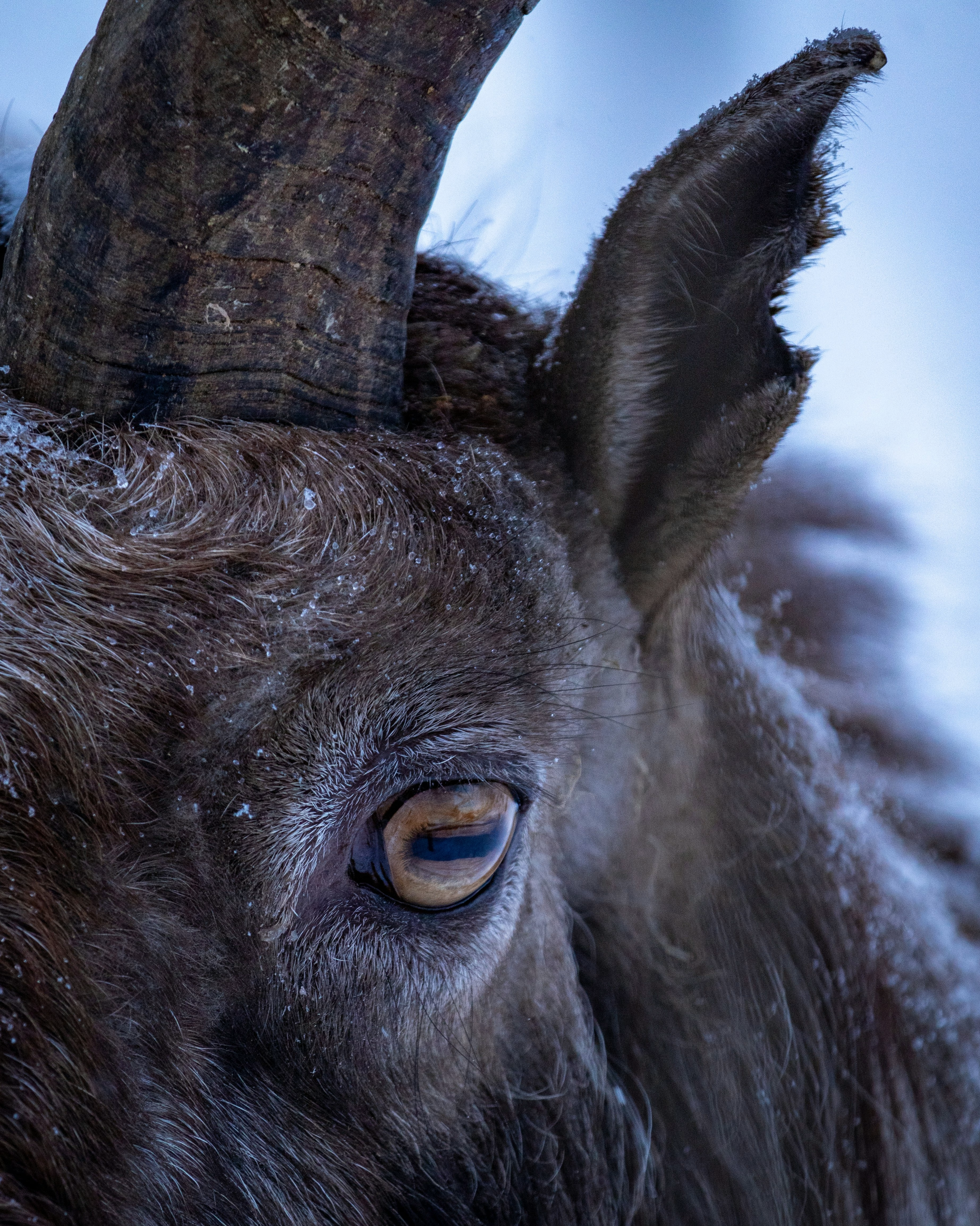
Astor Markhor
Famous for its wide, flared horns. Found primarily in the Gilgit-Baltistan region around Nanga Parbat and Astor Valley. Often considered the most impressive trophy.
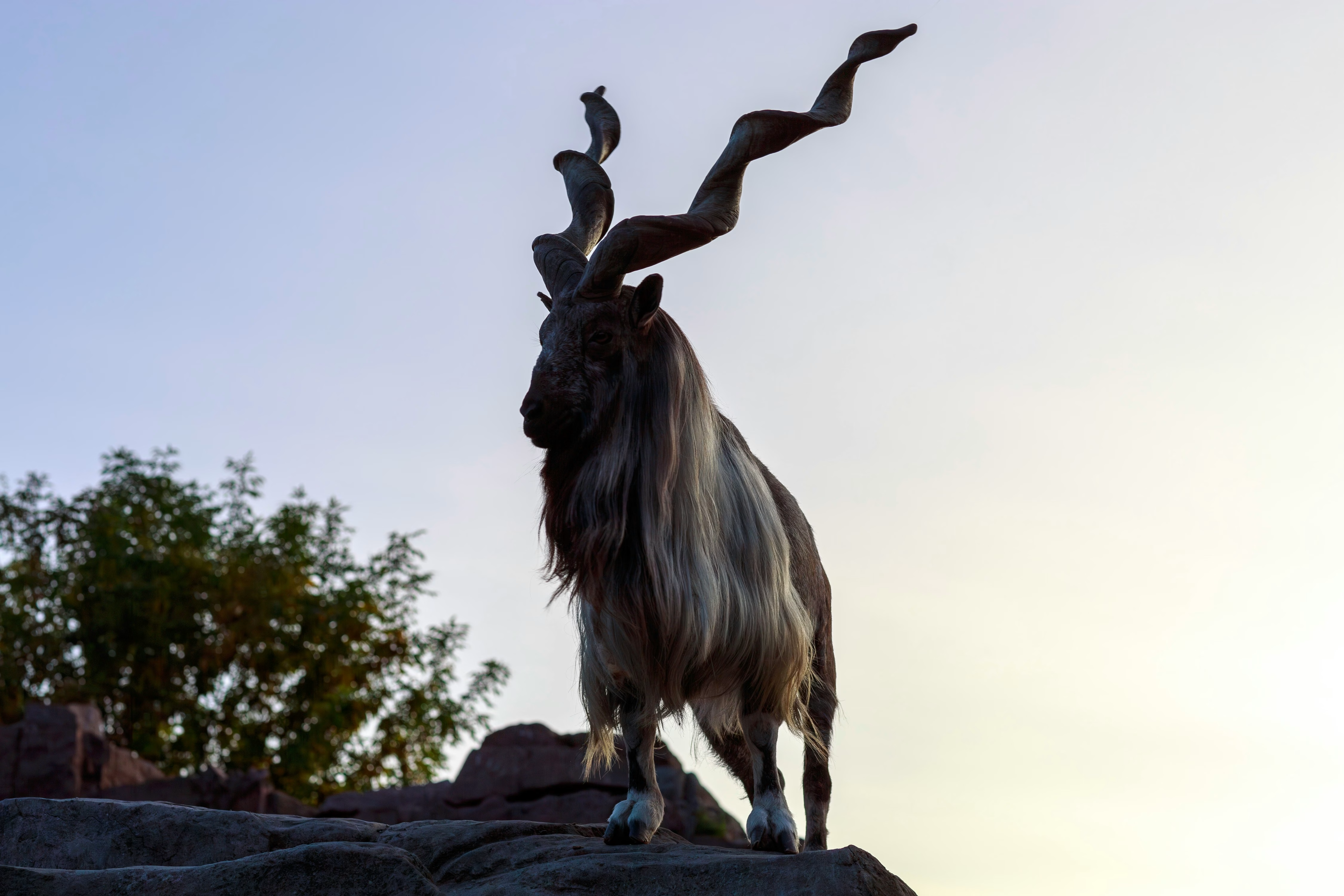
Kashmir Markhor
Known for long, elegant corkscrew horns. Primarily hunted in the Chitral and surrounding areas of Khyber Pakhtunkhwa.
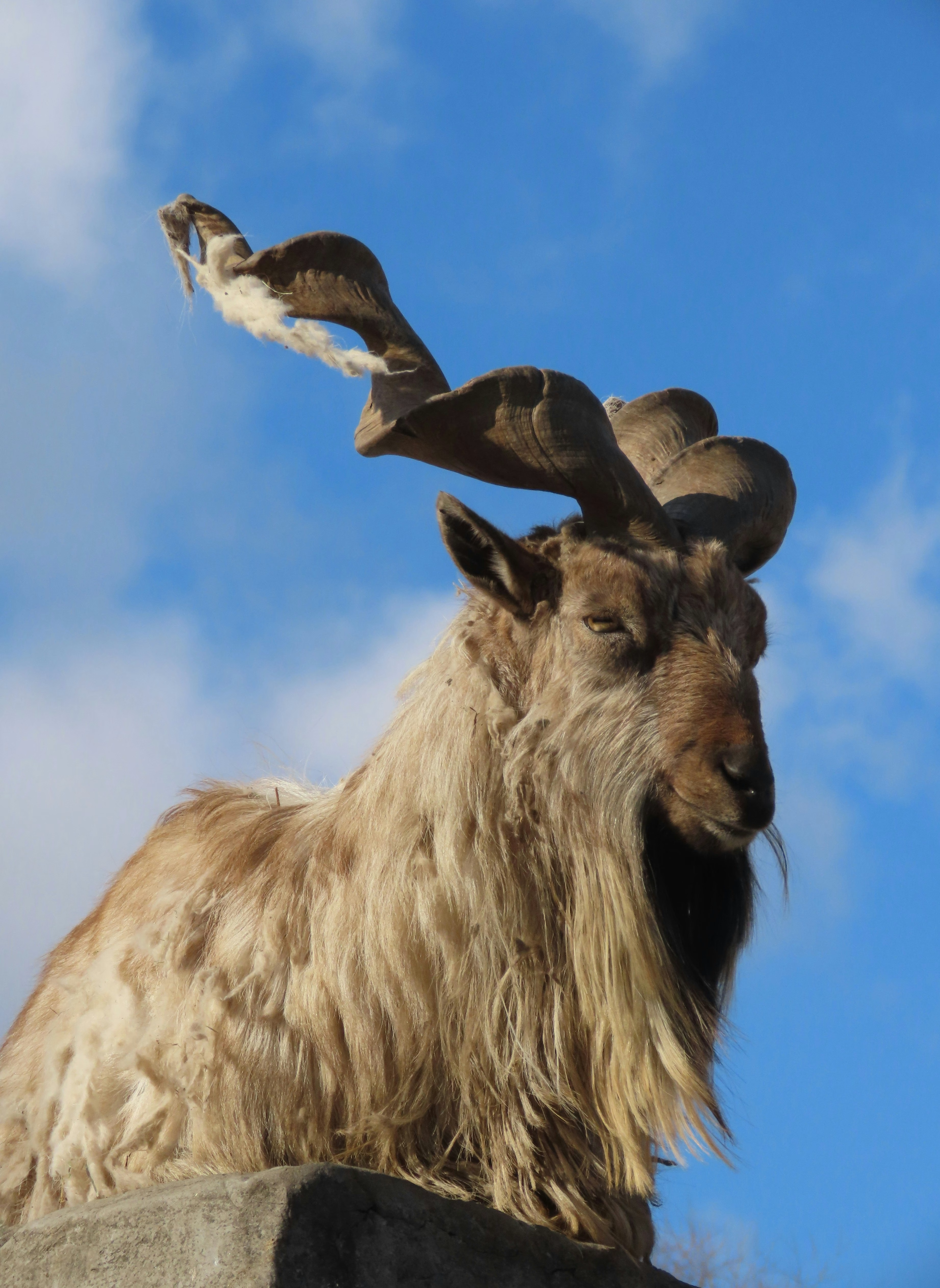
Sulaiman Markhor
Features straighter, less twisted horns. Found in the Sulaiman Range of Balochistan. A unique and challenging hunt in arid mountain terrain.
Markhor Hunting Packages 2025-2026
Limited permits available. Each hunt is fully organized with expert guides, luxury camps, and all logistics included.
Astor Markhor Hunt
Gilgit-Baltistan • 10–14 days
World-class flared horns in the shadow of Nanga Parbat.
Price on Request
Kashmir Markhor Hunt
Chitral Region • 12 days
Long, elegant horns in the Hindu Kush mountains.
Price on Request
Sulaiman Markhor Hunt
Balochistan • 8–10 days
Straight-horned Markhor in remote arid mountains.
Price on Request
Hunt Details
🗓️ Best Season
October to April, with the peak rut occurring from December to February. This is when Markhor are most active and visible at lower elevations.
⏱️ Hunt Duration
Typical hunts last 8 to 14 days, including travel days and acclimatization. Longer stays can be arranged for more flexible scheduling.
🏔️ Terrain & Difficulty
High-altitude spot-and-stalk hunting in steep, rocky terrain (8,000 – 14,000+ ft). Good physical fitness is essential. Hunts involve significant hiking and glassing.
✅ What's Included
Government permit, professional local guides & trackers, luxury tented camps, all meals, internal transportation, field trophy preparation, and airport transfers within Pakistan.
Conservation & Permit System
Markhor hunting in Pakistan is strictly regulated through a community-based conservation program. Permits are extremely limited and awarded via annual government auctions. This system has been highly successful in increasing Markhor populations while generating sustainable income for remote mountain communities.
A significant portion of the permit fees is returned directly to the local communities for:
- Habitat protection and anti-poaching patrols
- Community development projects (schools, health clinics, clean water)
- Alternative livelihood programs to reduce poaching pressure
Only a handful of Markhor permits are issued each year across all subspecies. This makes every hunt a rare and meaningful contribution to wildlife conservation in Pakistan.
What to Expect on a Markhor Hunt
Markhor hunts are physically demanding, high-altitude adventures that combine challenging stalking with spectacular mountain scenery. Most hunts follow a classic spot-and-stalk approach in steep, rocky terrain between 8,000 and 14,000+ feet.
Daily Routine
Hunters typically start early with glassing from high vantage points. Once a mature ram is located, the stalk begins — often involving several hours of careful movement across difficult ground. Evenings are spent back at camp enjoying hot meals and sharing stories.
Physical Demands
Expect significant hiking at altitude. Good cardiovascular fitness and strong legs are essential. Our guides are highly experienced and will adjust the pace to your fitness level.
Camp Experience
Camps are comfortable and well-equipped with hot meals, private tents, and dedicated staff. You’ll enjoy traditional Pakistani hospitality while surrounded by dramatic Himalayan or Karakoram peaks.
Gear & Rifle Recommendations
Success on a Markhor hunt often depends on proper preparation. Here are our recommended guidelines based on years of experience in Pakistan’s high mountains.
Recommended Rifle & Caliber
Flat-shooting, accurate rifles chambered in 7mm Rem Mag, .300 Win Mag, or .300 PRC are ideal. These calibers offer excellent performance at 300–500+ yard shots commonly encountered in open mountain terrain. Bring 40–60 rounds of high-quality ammunition.
Optics
A high-quality variable scope with 3-15x or 4-16x magnification is recommended. Premium binoculars (10x42 or 12x50) and a spotting scope (20-60x) are essential for long-range glassing.
Clothing & Footwear
Layering is key due to extreme temperature swings. Bring merino wool base layers, insulated mid-layers, a waterproof shell, and a warm down or synthetic jacket. Sturdy mountain boots with good ankle support and crampons are recommended for icy slopes.
Other Essential Gear
- High-quality trekking poles
- Range finder (with angle compensation)
- Headlamp with extra batteries
- Heavy-duty backpack (40–60L)
- Sunglasses, sunscreen, and a wide-brim hat
Ready for Your Markhor Hunting Adventure in Pakistan?
Secure your permit for the 2025-2026 season with expert guidance, full logistics, and a truly unforgettable experience in the mountains of Pakistan.
Inquire Now – Limited Permits AvailableOur team will respond within 24 hours with full details and availability.
Is Markhor Hunting Legal in Pakistan?
Yes, markhor hunting is legal in Pakistan, but only under a strictly regulated trophy hunting program. The Markhor is Pakistan’s national animal and a protected species, so hunting is not freely allowed.
The government permits hunting through controlled quotas issued by provincial wildlife departments, mainly in northern regions like Gilgit-Baltistan and Khyber Pakhtunkhwa. Each year, only a small number of permits are auctioned—typically for older male animals that are past their prime breeding age.
A key part of the program is conservation: around 80% of the permit fee goes to local communities, giving them a financial incentive to protect wildlife and prevent poaching. This model has helped increase markhor populations over time.
So, while hunting is legal, it’s tightly controlled, expensive, and designed to support conservation rather than reduce wildlife.
What are the regulations on markhor hunting permits?
Markhor hunting permits in Pakistan come with strict rules to ensure sustainability and ethical hunting practices.
The system is highly controlled, with a limited annual quota (usually under 100 permits nationwide). These permits are not freely available and are typically distributed through government auctions or licensed outfitters.
Only older male markhor (typically 8+ years) can be hunted, ensuring younger breeding animals are protected and the population remains stable.
Foreign hunters must book through approved licensed outfitters, and independent hunting is not permitted under any circumstances.
Hunting is restricted to designated regions such as Astore, Chitral, and parts of Gilgit-Baltistan, and is only allowed during a fixed seasonal window, usually in winter (December to February).
A significant portion of the permit fees is directed toward local communities and conservation programs, which helps fund wildlife protection and incentivizes anti-poaching efforts.
How do you get a markhor hunting license in Pakistan?
Obtaining a markhor hunting license in Pakistan is a highly regulated process managed by provincial wildlife authorities under a controlled trophy hunting program. It is not a direct application system for individuals and is typically handled through official channels and licensed operators.
In practice, permits are issued through government-regulated auctions or allocated to approved international hunting outfitters. Interested hunters must work with these licensed operators, who handle applications, documentation, and compliance with wildlife regulations.
The program is primarily administered in northern Pakistan, including regions such as Gilgit-Baltistan and Khyber Pakhtunkhwa, where local wildlife departments set annual quotas based on population assessments and conservation goals.
Successful applicants are required to follow strict conditions, including hunting only designated mature male markhor, adhering to seasonal restrictions, and operating only within approved conservation areas. These rules are enforced to ensure the species' long-term survival.
Importantly, a significant portion of permit revenue is reinvested into community development and wildlife conservation programs, which helps maintain local support for anti-poaching efforts and habitat protection.
Because of the complexity and exclusivity of the system, most hunters begin by contacting a certified safari or trophy hunting outfitter, who then guides them through the full legal process.
How much does a markhor hunting license cost?
The cost of a markhor hunting license in Pakistan is extremely high due to its rarity and strict conservation controls. It is not sold at a fixed price—instead, it is allocated through government-run auctions in regions like Gilgit-Baltistan and Chitral.
In recent years, prices for a single permit have typically ranged from $160,000 to over $370,000 USD, depending on the bidding competition, species subspecies (such as the Astore markhor), and location of the hunt.
For example, in a recent Gilgit-Baltistan auction, a single Astore markhor permit sold for a record $370,000 (around Rs 100 million), making it one of the most expensive hunting licenses ever issued globally.
These high fees are part of Pakistan’s community-based trophy hunting program, where approximately 80% of revenue goes directly to local communities to fund conservation, infrastructure, and anti-poaching efforts.
Because prices depend on annual auctions and international demand, the exact cost can change each season, but it consistently remains among the highest wildlife hunting permit fees in the world.
What is the difference between a permit and a license?
In the context of markhor hunting in Pakistan, the terms permit and license are often used together, but they refer to different parts of the legal process.
A hunting permit is the official authorization issued by the government that allows a specific animal to be hunted under strict conditions. It is typically tied to a quota system and is allocated through auctions or wildlife departments.
A hunting license, on the other hand, is the legal credential that allows a person (or outfitter and client) to participate in regulated hunting activities. It confirms that the hunter is operating within the law and following required regulations.
In simple terms: the permit is permission to hunt a specific animal, while the license is the legal authorization to hunt in general within the country or region.
For markhor trophy hunting in Pakistan, both are required. The permit is usually extremely limited and auction-based, while the license is obtained through approved wildlife authorities or licensed outfitters who manage the full process.
What is the total price of markhor hunting in Pakistan?
The total cost of a markhor hunt in Pakistan is extremely high because it is based on a government-controlled trophy hunting system where the main expense is the official permit.
In most cases, the total price ranges from $220,000 to $400,000+ USD, depending on the year, species, and auction results.
The largest portion of the cost comes from the trophy hunting permit, which is issued through government auctions and can alone cost between $160,000 and $370,000+ USD.
In addition to the permit, hunters must also pay for outfitter services, which typically include guiding, accommodation, transport, and logistics. These services usually add $20,000 to $60,000+ USD.
Extra expenses such as travel, insurance, licensing paperwork, and trophy export permits (CITES documentation) can add another $5,000 to $15,000+ USD.
Overall, markhor hunting is considered one of the most expensive regulated wildlife experiences in the world, with most of the cost going directly into conservation and local community development programs.
Can you compare hunting packages for markhor in Pakistan?
Markhor hunting in Pakistan is not sold as a fixed tour package. Instead, it is a regulated trophy hunting system where the main cost is the government-issued permit, and the rest depends on the level of services provided by licensed outfitters.
Total prices generally range from $220,000 to over $400,000 USD, depending on the permit auction price, region, and level of comfort included in the expedition.
Standard Trophy Hunt Package
This is the most common option used by international hunters. It includes a government permit, basic guiding services, mountain camping, local transport, and trophy handling support. The total cost typically ranges from $220,000 to $350,000 USD.
It is focused on a traditional wilderness hunting experience with limited luxury but full legal compliance.
Premium / Luxury Expedition Package
This high-end option includes the most expensive permits, improved logistics, luxury accommodation before and after the hunt, and enhanced field support such as better transport and scouting assistance.
The total cost usually ranges from $300,000 to $450,000+ USD, depending on the auction result and exclusivity of the hunting area.
Budget-Style Licensed Hunt (Limited Availability)
In rare cases, lower-tier permits or less competitive zones may reduce overall costs. These hunts still require full licensing and professional guiding but use simpler logistics and camps.
Total cost typically ranges from $180,000 to $250,000 USD, but availability is limited and depends on annual auction outcomes.
In all cases, the government permit accounts for the majority of the total price, while outfitters and logistics make up the remaining cost. Around 80% of revenue is reinvested into local communities and conservation programs, making it a regulated conservation-based system.
Where can you hunt markhor in Pakistan?
Markhor hunting in Pakistan is only allowed in designated conservation areas under a strict government-managed trophy hunting program. These areas are located mainly in the country’s northern mountain regions.
The most important hunting regions include Gilgit-Baltistan, Khyber Pakhtunkhwa (KPK), and specific protected valleys where markhor populations are carefully managed.
Gilgit-Baltistan
Gilgit-Baltistan is one of the most famous regions for markhor hunting, especially for the Astore markhor. Key valleys include Astore, Skardu, and surrounding community-managed conservancies.
Chitral (Khyber Pakhtunkhwa)
The Chitral region is known for the Chitral markhor, one of the most sought-after subspecies. Hunting here takes place in controlled community conservancies such as remote valleys and protected forest zones.
Other Controlled Areas in KPK
Limited trophy hunts are also conducted in select parts of northern KPK where wildlife departments manage populations through strict quotas and seasonal permits.
Hunting is not allowed outside these designated areas, and all expeditions must be arranged through licensed outfitters working with provincial wildlife authorities. This system is designed to protect wild populations while generating income for local communities.
What’s the difference between Astore and Kashmir markhor hunting?
The main difference between Astore and Kashmir markhor hunting lies in the subspecies, geographic location, terrain, and trophy characteristics. Both are part of Pakistan’s regulated trophy hunting program, but they come from different mountain ecosystems.
Astore Markhor Hunting
The Astore markhor is found mainly in Gilgit-Baltistan particularly in the Astore Valley and surrounding mountainous conservancies. It is known for its large, tightly curled horns and steep alpine habitat.
Hunting conditions in Astore are extremely rugged, with high-altitude terrain, deep snow in winter, and long glassing distances. This makes it a physically demanding but highly prized trophy hunt.
Kashmir Markhor Hunting
The Kashmir markhor is primarily found in Azad Kashmir and parts of northern Pakistan bordering the western Himalayan region. This subspecies typically has more flared and outward-sweeping horns compared to the Astore type.
The terrain in Kashmir markhor areas is generally more forested and mixed with steep valleys, making visibility and tracking different from the open alpine slopes of Astore.
Key Differences
Astore markhor hunts are usually associated with higher altitudes, more open rocky terrain, and extremely large spiral horn trophies. Kashmir markhor hunts take place in more forested, rugged Himalayan landscapes and often involve different tracking conditions.
Both hunts are strictly regulated under Pakistan’s conservation-based trophy hunting system, with permits issued through government quotas and managed to support local communities and wildlife protection.
How do you book a guided markhor hunting trip?
Booking a guided markhor hunting trip in Pakistan is a highly structured process because it is part of a government-regulated trophy hunting program managed through provincial wildlife authorities, including the Khyber Pakhtunkhwa Government and the Government of Gilgit-Baltistan. It cannot be booked directly by individuals through a simple online reservation system.
The first step is to contact a licensed hunting outfitter that is officially authorized to operate in regions such as Gilgit-Baltistan and Khyber Pakhtunkhwa. These outfitters act as the main link between the hunter and the government auction system. Pleiades Travel is an example of a licensed hunting outfitter.
Once you choose an outfitter, they help you secure a trophy hunting permit, which is allocated through annual government auctions. This permit is the most important and expensive part of the process.
After the permit is secured, the outfitter arranges the full expedition, including travel planning, accommodation in mountain camps or lodges, local transport, and experienced professional guides who know the hunting territory.
Hunters must also complete legal requirements such as firearm import permits (if needed), CITES trophy export documentation, insurance, and compliance with seasonal hunting rules.
Because permits are extremely limited and high in demand, bookings are often made months or even a year in advance through established safari companies with government connections.
In summary, the process is not a direct booking—it is a permit-first system managed through licensed outfitters who handle the entire legal and logistical process.
What are the requirements for foreigners to hunt markhor?
Foreigners can legally hunt markhor in Pakistan only under a strictly regulated trophy hunting program managed by provincial wildlife authorities. Hunting is not open-access and must follow a permit-based system designed for conservation and community benefit.
The most important requirement is obtaining a government-issued trophy hunting permit, which is allocated through annual auctions in regions such as Gilgit-Baltistan and Khyber Pakhtunkhwa. Foreign hunters cannot apply directly and must work through licensed outfitters.
Foreign hunters are required to book through an approved and licensed hunting outfitter. These operators handle all legal paperwork, permit acquisition, logistics, and coordination with wildlife departments.
A valid hunting license, passport, and necessary travel documentation are required. In addition, hunters must comply with international wildlife trade rules, including CITES permits for trophy export.
Hunting is only permitted during the official season (typically winter months) and only in designated conservancy areas. Strict rules apply regarding species, age (only mature males), and quotas set annually by the government.
Foreign hunters must also follow all local regulations, including firearm import permits (if applicable), insurance requirements, and supervision by licensed professional guides throughout the expedition.
In summary, foreigners cannot independently organize a markhor hunt—it is a permit-first, outfitter-managed, conservation-based system with strict legal and environmental controls.
What is the best time of year for markhor hunting?
The best time of year for markhor hunting in Pakistan is during the official winter hunting season, which typically runs from December to February. This is the only legal window when trophy hunting is permitted.
During this period, markhor descend to lower elevations due to heavy snowfall in higher alpine zones, making them more accessible for tracking and observation in designated conservancy areas.
Weather conditions play a major role in hunting success. Cold, clear winter days often provide the best visibility in mountainous terrain, while fresh snowfall can help hunters track animal movement more easily.
Hunting outside this season is strictly prohibited under Pakistan’s wildlife regulations, as the program is designed to minimize ecological impact and ensure breeding populations are protected during critical periods.
In summary, mid-winter (December to February) is the only legal and most effective time for markhor hunting in Pakistan due to animal movement patterns and regulated access conditions.
What gear is recommended for markhor hunting?
Markhor hunting takes place in steep, high-altitude mountain terrain, so proper gear is essential for safety, endurance, and success. Hunters typically operate in remote areas of northern Pakistan where weather conditions can change quickly.
The most important equipment is a reliable high-caliber rifle suitable for long-range mountain shooting, paired with quality optics such as a high-magnification spotting scope and binoculars for glassing steep terrain from long distances.
Clothing should be layered for extreme cold, including insulated jackets, waterproof outer shells, and thermal base layers. Temperatures in markhor habitats can drop well below freezing during the hunting season.
Strong mountain boots with ankle support are essential due to rocky, uneven terrain and long ascents at high altitude. Many hunters also use trekking poles for stability on steep slopes.
Additional recommended gear includes gloves, a warm hat, high-quality rain protection, and a durable backpack for carrying essential supplies during long glassing sessions in the field.
Professional outfitters usually provide field logistics such as tents, local guides, and pack animals, but personal gear must be carefully chosen for extreme alpine conditions.
In summary, successful markhor hunting requires a combination of precision optics, mountain-grade clothing, and physically demanding alpine equipment suited for remote high-altitude environments.
Where can you watch markhor hunting videos in Pakistan?
You can watch markhor hunting videos online, mainly through YouTube and wildlife documentary platforms. Most footage is filmed in northern Pakistan, especially in regions like Chitral, Gilgit-Baltistan, and other high-altitude conservancies where regulated trophy hunting takes place.
Many videos come from licensed hunting outfitters and professional hunters who document their expeditions to showcase the terrain, tracking process, and legal trophy hunting system.
You will also find wildlife documentaries showing markhor in the wild, including rare predator interactions filmed by conservation groups in Pakistan’s mountainous regions.
Some of the most well-known footage includes hunts and wildlife encounters recorded in areas like the Tooshi-Shasha Conservancy (Chitral) and remote valleys of northern Pakistan.
These videos are typically available on platforms such as YouTube, wildlife NGO channels, and hunting expedition channels that document legal trophy hunts under Pakistan’s conservation-based permit system.
In summary, the best place to watch markhor hunting videos is online—especially YouTube—where both hunters and conservation organizations share footage from Pakistan’s regulated mountain hunting regions.
FAQ
What is a markhor?
The markhor (Capra falconeri) is a large wild goat species native to the mountainous regions of Pakistan, Afghanistan, India, and parts of Central Asia. It is Pakistan’s national animal and is known for its distinctive spiral horns and ability to climb steep, rocky terrain.
Is a markhor a goat?
Yes, the markhor is a wild goat species and belongs to the same genus (Capra) as domestic goats.
How many markhor are left in the world?
Current estimates suggest there are roughly 5,700–6,000 markhor globally. Conservation efforts, particularly in Pakistan, have helped increase their population over the past few decades.
How many markhor are left in Pakistan?
Pakistan holds the majority of the global population, with an estimated 3,500–4,500 markhor. Numbers vary by region and subspecies, but populations are generally stable or increasing due to conservation programs.
Which country has the most markhor?
Pakistan has the largest population of markhor in the world, making it the primary stronghold for the species.
Are markhors endangered? / Is markhor endangered?
The markhor is currently classified as “Near Threatened” by conservation authorities. It was previously listed as “Endangered,” but its status improved due to successful conservation initiatives, including regulated trophy hunting programs and community-based wildlife protection.
What does a markhor eat? / What do markhors eat?
Markhors are herbivores. Their diet consists mainly of grasses, leaves, shrubs, herbs, and seasonal vegetation. In winter, they may browse on twigs and bark when other food sources are scarce.
Do markhors eat snakes? / Does a markhor eat snakes?
No, markhors do not eat snakes. They are strictly herbivorous animals. The common myth that they kill and eat snakes is not supported by scientific evidence.
Is a markhor dangerous?
Markhors are generally not dangerous to humans and tend to avoid contact. However, like any wild animal, they can become aggressive if threatened or cornered, especially males during the rutting season.
Is markhor halal?
Yes, markhor is considered halal to eat in Islamic dietary law because it is a herbivorous animal similar to goats. However, hunting and consumption are strictly regulated and often prohibited without proper permits due to conservation laws.
How to pronounce “markhor”?
It is commonly pronounced as “MARK-hor,” where “mark” sounds like the English word and “hor” is pronounced like “hore” (rhymes loosely with “more”).
How to draw a markhor?
Start by sketching the body shape of a goat, then add long legs and a slightly elongated face. The most important feature is the large, spiral horns—draw them twisting upward in a corkscrew pattern. Add details like a beard, short tail, and rough coat texture for realism.
Is the markhor endangered?
The markhor (Capra falconeri) is currently classified as Near Threatened by the International Union for Conservation of Nature. It was previously listed as Endangered, but its status improved due to conservation programs, especially in Pakistan. While populations are recovering, the species still faces threats from habitat loss and illegal hunting.
What does “markhor” mean?
The name “markhor” comes from Persian words meaning “snake eater.” However, this is based on folklore—markhors do not actually eat snakes.
What is a markhor? / What is a markhor animal?
The markhor is a large wild goat species native to mountainous regions of South and Central Asia. It is known for its impressive spiral horns and strong climbing ability. It is also the national animal of Pakistan.
What are markhor predators?
Natural predators of the markhor include Snow Leopard, Wolf, and occasionally Lynx. Young markhors are more vulnerable, while adults rely on steep terrain to escape predators.
What is markhor called in English? / What is markhor in English?
“Markhor” is already the English name. Scientifically, it is referred to as Capra falconeri, commonly described as a wild goat.
What do markhor eat?
Markhors are herbivores. Their diet includes grasses, leaves, shrubs, herbs, and seasonal plants. In colder months, they may feed on twigs and bark.
Where are markhor found?
Markhors are found in mountainous regions of Pakistan, Afghanistan, India, and parts of Central Asia such as Tajikistan and Uzbekistan.
Where do markhors live?
Markhors live in rugged, high-altitude environments such as cliffs, rocky slopes, and open woodlands. They typically inhabit elevations between 600 and 3,600 meters, depending on the season, moving to lower altitudes in winter and higher areas in summer.
Where does the markhor live? / Where do markhors live? / Where markhor live?
The markhor (Capra falconeri) lives in rugged, mountainous regions with steep cliffs and sparse forests. It prefers elevations between 600 and 3,600 meters, moving higher in summer and lower in winter to find food and avoid harsh weather.
Where is the markhor found? / Where is the markhor found?
Markhors are found across parts of South and Central Asia, including Pakistan, Afghanistan, India, Tajikistan, and Uzbekistan.
Where is markhor found in Pakistan?
In Pakistan, markhors are mainly found in northern and western mountainous regions, including Gilgit-Baltistan, Chitral, Kohistan, and parts of Balochistan.
Why are markhors endangered? / Why is markhor endangered?
Markhors were previously endangered due to illegal hunting (poaching), habitat loss, competition with livestock for food, and weak wildlife enforcement. Although their status has improved to Near Threatened, these threats still exist in some areas.
Why is the markhor the national animal of Pakistan? / Why markhor is Pakistan’s national animal?
The markhor is the national animal of Pakistan because it symbolizes strength, resilience, and independence—qualities associated with surviving in harsh mountain environments. It also represents the country’s unique wildlife heritage.
How to save markhor?
Protecting markhors involves several proven strategies: enforcing anti-poaching laws, preserving natural habitats, reducing overgrazing by livestock, and supporting community-based conservation programs. In Pakistan, regulated trophy hunting programs have also helped by generating funds for local communities, encouraging them to protect the species.
Is markhor hunting legal in Pakistan?
Yes, but only under strict regulation. In Pakistan, limited trophy hunting permits are issued each year by provincial wildlife departments. These permits are expensive and tightly controlled, and a significant portion of the revenue goes to local communities and conservation efforts.
How fast can markhors run?
The markhor (Capra falconeri) can run at speeds of around 50–60 km/h (31–37 mph) over short distances. They are not just fast but extremely agile, using their speed along with powerful jumps to escape predators in steep terrain.
How can humans protect markhor?
Humans can protect markhors by supporting conservation programs, preventing illegal hunting, preserving mountain habitats, and reducing overgrazing by livestock. In Pakistan, community-based conservation and regulated trophy hunting programs have proven effective, aligning with guidance from organizations like the International Union for Conservation of Nature.
How is markhor important to humans?
Markhors play an important ecological and economic role. Ecologically, they help maintain vegetation balance in mountain ecosystems. Economically, regulated trophy hunting generates revenue for local communities, which encourages wildlife protection. They also hold cultural value as the national animal of Pakistan.
How long are the horns on a markhor goat?
Male markhors have long, spiral horns that can grow up to 1.5 meters (about 5 feet) in length. Females have much shorter and thinner horns.
How long does a markhor live?
Markhors typically live 10–13 years in the wild. In captivity, they may live slightly longer with proper care.
How many markhor are left? / How many markhor are left in the wild?
There are an estimated 5,700–6,000 markhors in the wild globally. Most of the population is found in Pakistan, which is considered the main stronghold for the species.
What are markhors? / What kind of animal is a markhor? / What is a markhor? / What is a markhor goat?
The markhor (Capra falconeri) is a large wild goat native to South and Central Asia. Known for its impressive spiral horns, the markhor is adapted to mountainous, rocky habitats. It is the national animal of Pakistan and a symbol of strength and resilience.
What are baby markhors called?
A baby markhor is called a kid, similar to domestic goats.
What are the main differences between a markhor and an impala? / What are main diffrances between markhor and impala?
Markhors are large wild goats with spiral horns, living in mountainous terrain, and are herbivorous browsers of shrubs and grasses. Impalas are medium-sized antelopes native to African savannas, with slender, curved horns in males, adapted for running across open grasslands. Their habitat, body structure, and horn shape are the main differences.
What does markhor mean in Persian? / What does markhor mean in Persia?
In Persian, “markhor” literally means “snake eater”. This is a folkloric reference; markhors are herbivores and do not eat snakes.
What does the markhor represent?
The markhor represents strength, agility, and resilience, surviving in harsh mountain environments. In Pakistan, it is a national symbol of wildlife conservation and cultural pride.
What does a markhor mountain goat look like?
Markhors have a sturdy body, long legs, a shaggy beard, and striking spiral horns. Males are larger with longer horns, while females are smaller with thinner horns. Their coat is generally brown with lighter underparts.
What did/do markhors eat? / What does a markhor eat? / What do markhor/markhors eat? / What is the markhor’s diet?
Markhors are herbivores. They eat grasses, leaves, shrubs, herbs, and seasonal plants, relying on twigs and bark during winter when other food is scarce.
What is a markhor male called?
A male markhor is simply called a bull. Females are called cows, and young are kids.
What is a markhor’s predator? / What are markhor predators?
Natural predators include Snow Leopard, Wolf, and Lynx. Young kids are especially vulnerable.
What are the dangers that the markhor faces?
Markhors face threats from poaching, habitat loss, competition with livestock, and weak law enforcement. Climate change and human encroachment can also affect their survival.
What biome does the markhor live in?
Markhors inhabit mountainous and rocky biomes, including cliffs, open woodlands, and alpine scrublands.
What category would a markhor fall under?
Markhors are mammals, specifically wild goats in the family Bovidae.
What countries is markhor found in / What country do markhor live in?
Markhors are found in:
Pakistan
Afghanistan
India
Tajikistan
Uzbekistan
What is being done to protect markhor?
Conservation measures include community-based protection, habitat preservation, anti-poaching enforcement, and regulated trophy hunting programs that fund local communities. These efforts have successfully increased some populations.
What is the status of the markhor / What is the markhor’s status?
The markhor is classified as Near Threatened on the IUCN Red List due to habitat loss and poaching, though populations are recovering thanks to conservation programs.